 Visual Paradigm Desktop |
  Visual Paradigm Online


In the modern business landscape, static business plans are rapidly being replaced by dynamic, visual frameworks. Whether you are a startup founder, a product manager, or an enterprise executive, the ability to visualize strategy and execution is paramount. The Ultimate Business Canvas Toolkit serves as a bridge between abstract ideas and actionable reality. By leveraging frameworks ranging from the Business Model Canvas to OKRs, teams can uncover insights, identify risks, and build robust roadmaps.
This comprehensive guide explores the essential components of the Business Canvas Toolkit and demonstrates how leveraging Artificial Intelligence (AI) through platforms like Visual Paradigm Online can revolutionize your strategic planning process.
Before diving into execution, it is critical to understand the foundational tools available in the toolkit. These frameworks are designed to deconstruct complex business problems into manageable components.
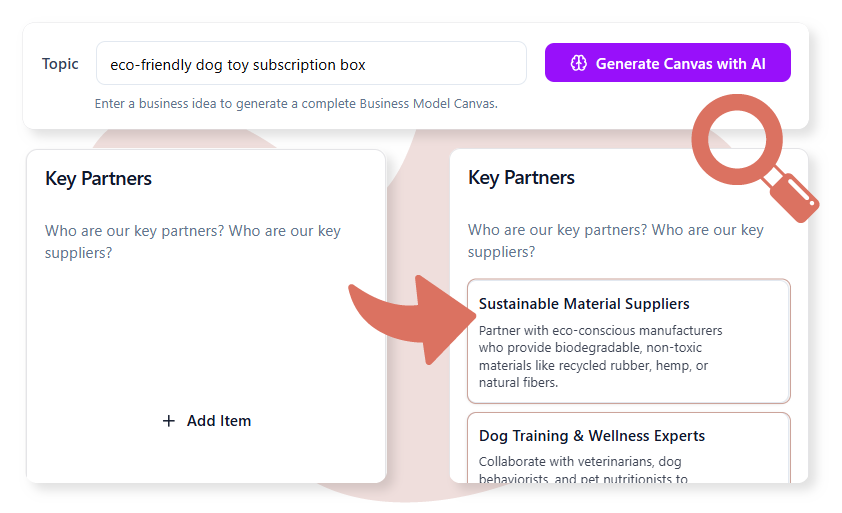
Visual Paradigm AI transforms the traditional, manual process of filling out canvases into an automated, insight-driven experience. By integrating AI into the Business Canvas Toolkit, users can move from a blank page to a comprehensive strategy in seconds.

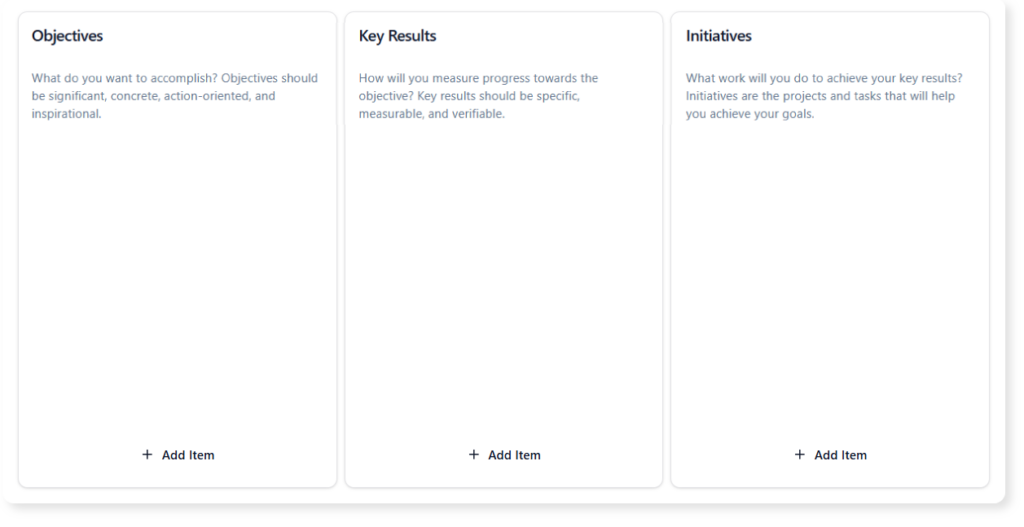
One of the most significant barriers to strategic planning is the “blank canvas” paralysis. VP AI eliminates this by generating entire canvases from a single prompt. For example, if you are planning a new initiative, you can enter a prompt like “OKRs for Tech Innovators Inc.,” and the AI instantly generates strategic objectives along with measurable, actionable key results.
Beyond generation, the AI acts as a strategic consultant. It analyzes context, industry benchmarks, and success indicators to help craft precise content. The system can:
Visual Paradigm Online supports the workflow with Multiple Views, allowing users to switch between a holistic canvas view and a focused deep-dive view. Once the strategy is finalized, Professional Exports allow teams to share AI analysis reports in Word, Markdown, or PDF formats for stakeholder review.
Among the various tools in the toolkit, the OKR framework stands out for driving execution. It ensures that the high-level strategies defined in a Business Model Canvas are translated into daily actions.
OKRs consist of two main parts:
The flexibility of the OKR canvas allows it to be applied across various domains:
| Industry/Domain | Example Application |
|---|---|
| Digital Experience | Website Redesign: Refreshing structure and visuals to create a smoother experience and increase engagement. |
| Customer Operations | Support Improvement: Enhancing service quality and response efficiency across support channels. |
| Product Growth | Product Launch: Detailing goals needed to introduce a new digital product and build strong initial adoption. |
To maximize the value of these frameworks, follow these structural guidelines during your planning sessions.
Not every problem requires every canvas. Use the Lean UX Canvas or Empathy Map when you are in the early stages of defining user problems. Switch to the McKinsey 7S Model or VRIO Framework when you need to evaluate internal resources and organizational alignment.
Particularly when using the Impact Effort Matrix or OKRs, ensure that your inputs are quantifiable. Vague statements lead to vague execution. Use the AI features to refine broad statements into specific metrics.
Use the toolkit to break down high-level concepts. For example, start with a Mission Model Canvas to define the “Why.” Then, move to a Customer Journey Canvas to map the user experience. Finally, use the Ansoff Matrix to plan growth strategies based on that experience.
Leverage the Focus View: When dealing with complex frameworks like the Business Model Canvas, it is easy to get overwhelmed. Use the “Focus View” in Visual Paradigm to deep-dive into a single section (e.g., Value Propositions) without the distraction of the surrounding boxes.
Combine Frameworks for Robustness: A SWOT analysis often reveals issues that can be solved by an OKR. If your SWOT identifies a “Threat” of new competitors, immediately generate an OKR canvas focused on “increasing market differentiation” to address it.
Validate with Logic Checks: Use the AI analysis tools to check for internal consistency. Does your Value Proposition in the BMC align with the Customer Segment in your Empathy Map? AI can help spot these disconnects early.
Collaborate in Real-Time: Strategy should not be a solo endeavor. Utilize real-time collaboration features to finalize canvases, adding notes and grouping related metrics to ensure that progress is truly trackable across the entire team.
What Is the Business Model Canvas? Why Use Visual Paradigms & AI Tools: This comprehensive guide explains the Business Model Canvas, its core components, and how visual paradigms and AI-powered tools enhance strategic planning and business innovation.
AI-Powered Business Model Canvas Builder – Instant Strategy Design: An AI-driven tool that automates the creation of business model canvases, offering intelligent suggestions and real-time insights to accelerate business planning.
AI Canvas Tool – Intelligent Design for Business Frameworks: An AI-powered canvas application that helps users generate and refine business models, value propositions, and strategy frameworks with smart suggestions and automation.
AI Business Model Canvas Tool – Smart Strategy Development: A comprehensive AI-enhanced solution for building and refining business models with intelligent insights, real-time feedback, and collaborative features.
AI Canvas Editor Release Update: Introduces an AI-powered canvas editor that enhances diagram creation through intelligent suggestions and automated layout optimization.
AI-Powered Business Model Canvas Tool Guide: A step-by-step guide on using an AI-enhanced tool to generate and refine business model canvases with intelligent input and real-time recommendations.
Mission Model Canvas | AI-Powered Strategy Tool by VP: October 28, 2025 – Coordinate live sessions with your team using the built-in timer and export your final canvas or reports into professional formats such as Word, Markdown, or CSV. … The Mission Model Canvas is specifically designed for non-profits, government agencies, social enterprises, and any organization where the primary goal is mission achievement rather than profit.
Comprehensive Tutorial: AI-Powered Business Canvas Toolkit with Visual Paradigm: This page provides a detailed guide on using an AI-enhanced Business Model Canvas toolkit integrated with Visual Paradigm for automated business strategy development.
AI Canvas Tool – Visual Paradigm: An AI-driven tool within Visual Paradigm that enables users to generate and refine business canvases through intelligent automation and natural language input.
Mastering the Business Model Canvas with AI: Step-by-Step Guide Using Visual Paradigm: This blog post offers a structured walkthrough of leveraging AI capabilities in Visual Paradigm to create, customize, and optimize Business Model Canvases efficiently.
How the AI Business Model Canvas Builder Works – Visual Paradigm: This page explains the functionality of the AI-powered Business Model Canvas Builder, highlighting how machine intelligence automates canvas creation and strategic insight generation.
Deep Learning AI Canvas | Strategy Tools Analysis Canvas Template: Edit Localized Version: 深度學習 AI 畫布(TW) | 深度学习 AI 画布(CN) View this page in: EN TW CN · Visual Paradigm Online (VP Online) is an online diagram software that supports analysis canvases, various charts, UML, flowchart, rack diagram, org chart, family tree, ERD, floor plan, etc .
Product Canvas | AI-Powered Strategy Tool by VP: Build products people love. Combine strategy, design, and feedback into one visual space with our AI-powered Product Canvas to bring ideas to market faster.
Lean UX Canvas | AI-Powered Strategy Tool by VP: October 28, 2025 – Create a complete strategy framework in moments. Simply describe your vision, and the AI canvas generator transforms it into a structured, insight-rich canvas that helps you visualize, plan, and refine your next big idea.
Lean Canvas – Visual Paradigm: October 28, 2025 – Our application is designed to be your strategic partner, providing intelligent tools to enhance every step of your planning process for the Business Model Canvas. … Have a startup idea? Just enter ‘a mobile app for local home-cooked meal delivery’ and let our AI generate a complete Lean Canvas, outlining the problem, solution, and key metrics.