Visual Paradigm Desktop |
  Visual Paradigm Online


Economic volatility is not a new phenomenon. From the dot-com bubble to the global financial crisis of 2008 and the post-pandemic shifts of the last few years, markets fluctuate. For business leaders, the goal is not to predict the future with perfect accuracy—that is impossible. The goal is to build resilience. Resilience comes from understanding the external forces that impact your organization. One of the most robust frameworks for this task is the PEST analysis.
When applied correctly, PEST (Political, Economic, Social, and Technological) provides a macro-environmental view that helps organizations anticipate change. This guide details how to utilize this framework specifically to shield your company during economic downturns. We will move beyond theory into practical application, ensuring you have a strategic buffer against market instability.
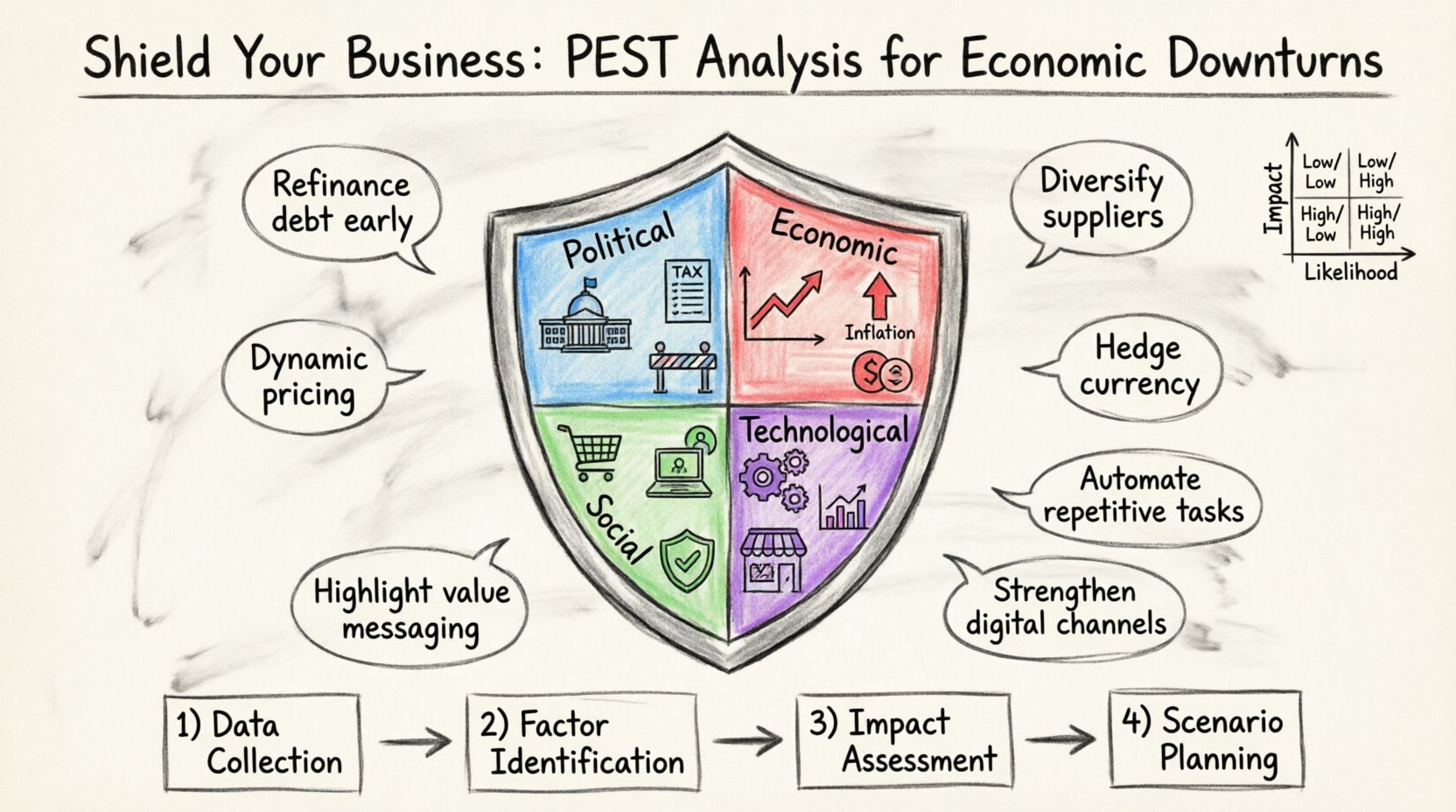
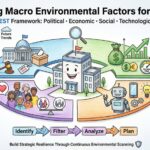
Before diving into recession-proofing strategies, it is essential to define the tool. PEST is a strategic management tool used to scan the external environment. It categorizes factors that influence an organization but are outside its direct control. By mapping these factors, leadership teams can identify risks and opportunities before they materialize.
The acronym stands for:
While this framework is often used for market entry, its utility in risk management is equally powerful. During an economic downturn, the Economic pillar becomes critical, but ignoring the other three pillars can leave gaps in your defense strategy. A comprehensive shield requires looking at the whole picture.
The ‘E’ in PEST is the most direct indicator of financial health. When analyzing economic factors for recession preparedness, you must look at specific variables that dictate cash flow and purchasing power. These are not abstract concepts; they are the drivers of your bottom line.
Central banks adjust interest rates to control inflation or stimulate growth. When rates rise, the cost of borrowing increases. This impacts your ability to fund operations or expand without depleting reserves.
Inflation erodes the value of currency. For your customers, this means less money to spend on non-essential goods. For your business, it means higher costs for raw materials and labor.
If you import materials or export products, currency fluctuation can make or break a quarter.
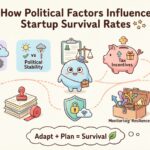
Political stability is often overlooked until a policy shift disrupts operations. During economic stress, governments often intervene with new regulations or stimulus packages. Understanding the political landscape helps you prepare for these shifts.
Proactive engagement with industry associations can provide early warnings on legislative changes. This allows you to adjust your compliance strategy before a law is enforced, avoiding costly penalties.
When money is tight, human behavior changes. Social analysis helps you understand how your customers will react to financial stress. These shifts are often psychological as much as they are financial.
Consumers move from discretionary spending to essential goods. Luxury items suffer, while value-oriented products see stability.
Recent social shifts have normalized remote work. This affects commercial real estate demand, commuting costs, and technology adoption.
Public health crises often linger in consumer memory. Trust in safety protocols remains high.
Technology is often the first area cut during a downturn. However, this is a strategic error. Technology should be the shield, not the casualty. Automation and digital transformation can reduce long-term operational costs.
Knowing the factors is one thing; acting on them is another. Here is a structured approach to running a PEST analysis specifically for economic resilience.
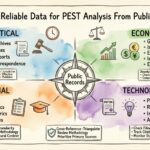
Gather intelligence from credible sources. Avoid rumors. Look for government reports, central bank publications, and industry research. Compile this data into a central repository.
Brainstorm with cross-functional teams. Ask specific questions:
Rate each factor on a scale of 1 to 5 based on potential impact and likelihood of occurrence. Focus your resources on the high-impact, high-likelihood risks.
Develop three scenarios: Best Case, Base Case, and Worst Case. Create contingency plans for each. For example, if revenue drops by 20% (Worst Case), what are the immediate cost-cutting measures?
To visualize the relationship between PEST factors and mitigation strategies, consider the following matrix. This helps in prioritizing actions based on the nature of the threat.
| PEST Category | Key Risk Indicator | Potential Impact | Mitigation Strategy |
|---|---|---|---|
| Political | New Trade Tariffs | Increased Import Costs | Diversify supply chain; local sourcing |
| Economic | Interest Rate Hikes | Higher Debt Service | Lock in fixed rates; reduce leverage |
| Social | Reduced Consumer Confidence | Lower Sales Volume | Focus on value products; loyalty programs |
| Technological | Cybersecurity Threats | Data Breaches; Operational Halt | Invest in security; backup systems |
A PEST analysis is not a one-time event. The economic landscape changes weekly. To maintain your shield, you must institutionalize the monitoring process.
External analysis must be balanced with internal reality. A strong PEST analysis is useless if your internal structure cannot support the required changes. Combine this with an internal audit.
Even with a robust framework, organizations make mistakes. Awareness of these common errors can save your strategic planning efforts.
If your business operates internationally, the PEST analysis must be localized. A policy change in one country may have ripple effects globally. Consider the geopolitical relationships between your markets.
Shielding your business from economic downturns requires more than just cutting costs. It requires foresight. By utilizing the PEST analysis, you move from a reactive stance to a proactive one. You stop being surprised by market shifts and start preparing for them.
The economy will fluctuate. The political landscape will shift. Technology will evolve. Social trends will change. Your business does not need to be immune to these forces, but it must be adaptable. The PEST framework provides the structure to build that adaptability. It transforms uncertainty into a variable you can manage.
Start your analysis today. Gather the data. Engage your team. Build the plan. When the next downturn arrives, your organization will not just survive; it will be positioned to emerge stronger than those who were caught off guard.