Visual Paradigm Desktop |
  Visual Paradigm Online


The transition from academic study to professional software development is rarely a straight line. It involves shifting from theoretical constructs to practical, iterative delivery. In the modern technology landscape, the ability to adapt quickly, collaborate effectively, and deliver value incrementally is just as critical as writing efficient code. This guide outlines the essential competencies a computer science student must develop to thrive in an agile environment.
Agile is not merely a set of meetings or a specific toolset; it is a philosophy of work. It prioritizes individuals and interactions over processes and tools, working software over comprehensive documentation, customer collaboration over contract negotiation, and responding to change over following a plan. For a student, understanding this shift is the first step toward a sustainable career.
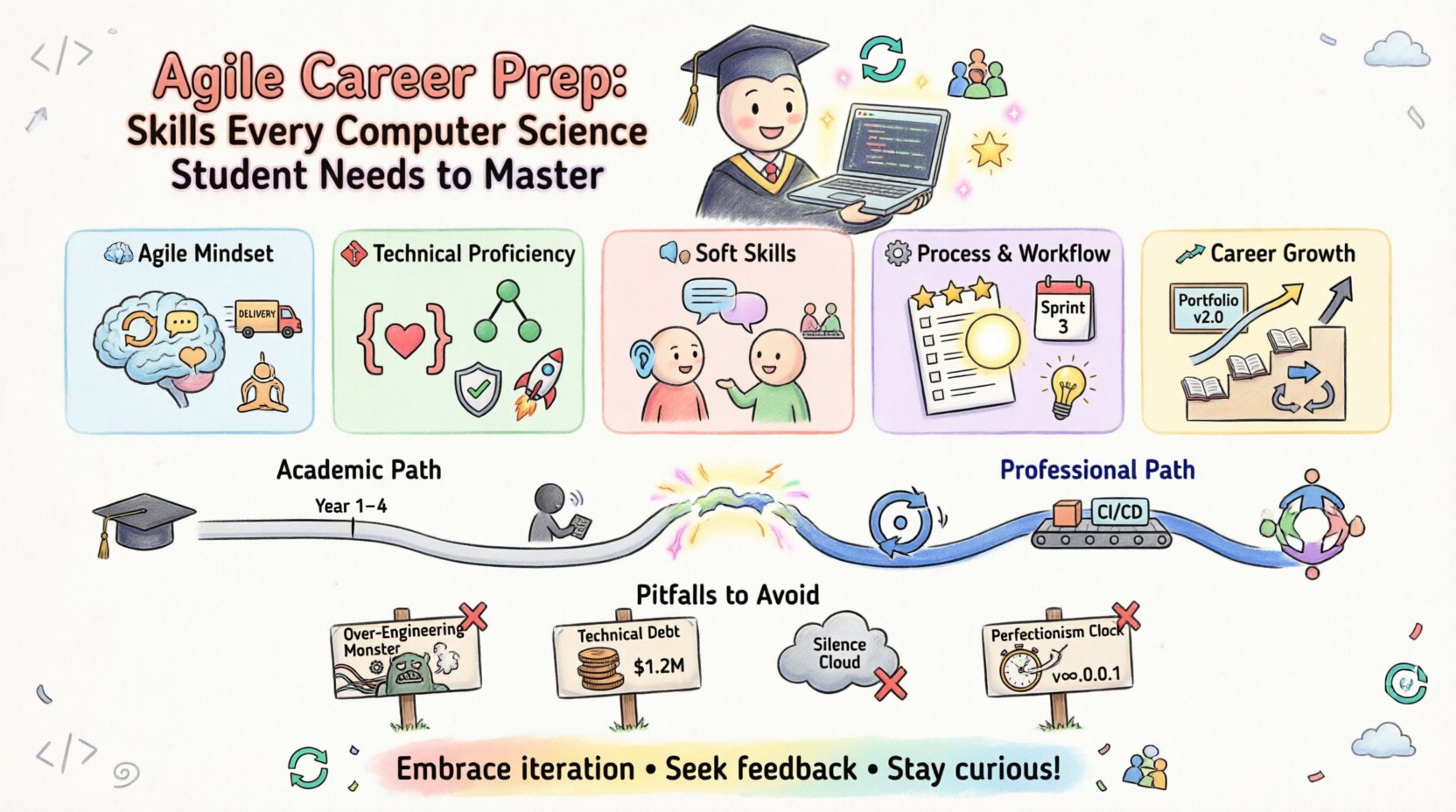
Before diving into specific methodologies, one must internalize the values that drive agile success. This mindset permeates every aspect of professional life, from how code is written to how conflicts are resolved.
Students often struggle with the ambiguity of agile tasks compared to the rigid specifications of university assignments. Learning to navigate this ambiguity is a skill in itself.
While the agile philosophy focuses on people, the foundation remains technical. However, the way technical skills are applied changes when working in a team environment.
In a solo project, you might write code that works for you. In a team, code must be readable by others. This requires adherence to clean code principles.
Collaboration requires a shared history of changes. Proficiency with version control is non-negotiable.
The ability to take code from a local machine to a live environment is a vital skill. This process, often called continuous integration and deployment, ensures that software is always in a deployable state.
Technical skills get you hired, but soft skills get you promoted. In agile teams, communication is the glue that holds the process together.
Agile relies on trust. Hiding problems delays their resolution. Be open about progress, blockers, and challenges.
Understanding requirements requires listening to stakeholders, not just reading tickets. Paraphrase what you hear to ensure alignment.
The goal is team success, not individual heroics. Share knowledge and help teammates succeed.
Understanding the mechanics of agile frameworks helps you navigate daily work. You do not need to be a Scrum Master to understand the flow.
The backlog is the single source of truth for work. It contains everything that might be needed.
Work is often organized into short cycles called sprints. This creates a rhythm for the team.
Regular reflection allows the team to improve its process. This is not about finding faults, but about finding improvements.
The technology landscape changes rapidly. Skills that are relevant today may be obsolete in a few years. A commitment to learning is necessary for longevity.
Formal education ends, but learning never stops. Use available resources to fill knowledge gaps.
Projects demonstrate capability better than resumes. Show, don’t just tell.
To visualize the shift in expectations, compare the typical academic environment with the professional agile environment.
| Aspect | Academic Environment | Professional Agile Environment |
|---|---|---|
| Goal | Grade / Correctness | User Value / Business Impact |
| Timeline | Semester / Fixed Deadline | Iterative Cycles / Continuous Delivery |
| Feedback | Grader / End of Term | Peers / Stakeholders / Automated Tests |
| Code Ownership | Individual | Collective / Shared Ownership |
| Requirements | Fixed at Start | Dynamic / Evolving |
| Success Metric | Passing Tests | Deployable Software / Customer Satisfaction |
Even with the right skills, new professionals often stumble. Being aware of common traps helps you navigate your early career.
Preparing for a career in software development requires more than just syntax knowledge. It demands a shift in how you approach problems, collaborate with others, and view your own growth. By focusing on iterative delivery, clear communication, and continuous improvement, you position yourself for long-term success.
The journey from student to professional is about building habits that serve you well beyond the first job. Embrace the uncertainty, seek feedback, and remain curious. The industry values those who can adapt and learn as much as those who already know the answers. Start applying these principles in your current projects, and you will find yourself better prepared for the realities of the workplace.
Remember, every line of code you write and every conversation you have is an opportunity to practice these skills. Treat your education as the beginning of your professional practice, not a separate phase of life.