Visual Paradigm Desktop |
  Visual Paradigm Online


Collaboration in academic settings often resembles a chaotic sprint rather than a structured marathon. Student projects, whether in engineering, humanities, or business, frequently suffer from uneven workloads, unclear deadlines, and communication breakdowns. The solution often lies not in working harder, but in working with a system designed for adaptability and transparency. Adopting agile methodologies transforms the student group dynamic from a collection of individuals into a cohesive unit capable of delivering quality outcomes consistently.
This guide outlines the specific habits and structural changes required to implement agile practices within a university or school context. It focuses on the human elements of teamwork, time management, and iterative progress, stripping away the jargon to focus on actionable behaviors.
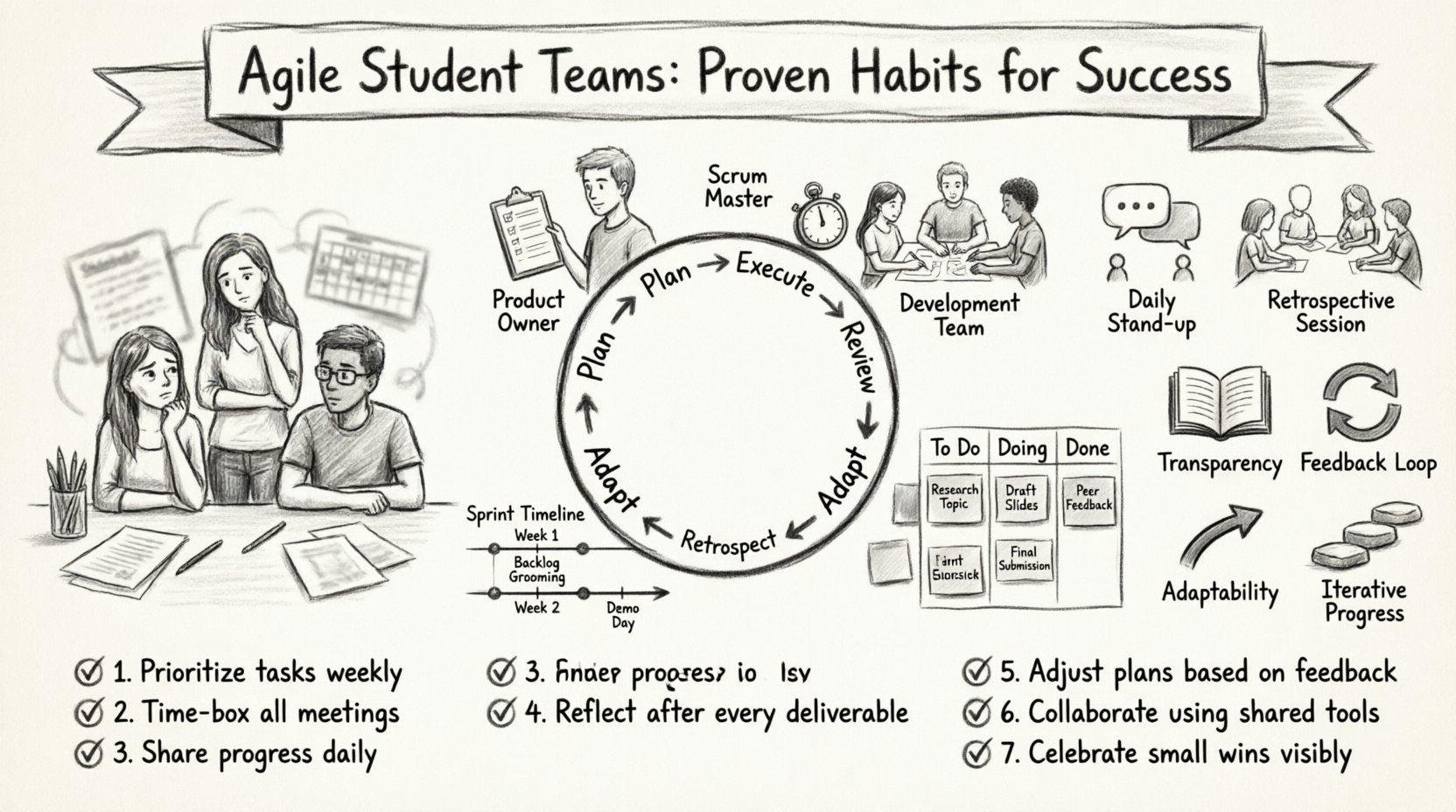
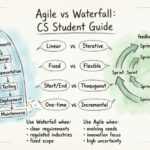
Traditional academic projects often follow a linear path: research, draft, finalize, submit. This “Waterfall” approach assumes that requirements are fully understood at the start. In reality, student projects evolve. New information surfaces, group members drop off, or technical hurdles appear. Agile is a response to this uncertainty. It prioritizes individuals and interactions over processes, and working solutions over comprehensive documentation.
For students, this shift means accepting that change is inevitable and planning for it. It does not mean abandoning structure. Instead, it means breaking large semester-long goals into smaller, manageable cycles.
One of the primary causes of friction in student groups is ambiguity regarding who is responsible for what. Agile suggests assigning specific roles to ensure accountability without creating a rigid hierarchy. These roles should be distributed based on team strengths and available time.
| Role | Responsibility | Student Equivalent |
|---|---|---|
| Product Owner | Defines goals and priorities | Project Lead / Client Liaison |
| Scrum Master | Removes obstacles and facilitates meetings | Facilitator / Timekeeper |
| Development Team | Executes the work | Researchers / Writers / Coders |
The Product Owner ensures the team is building the right thing. They manage the backlog of tasks and clarify requirements. In a student setting, this person is often the one who interfaces with the professor or client.
The Scrum Master does not manage the people but manages the process. They ensure meetings start on time, distractions are minimized, and conflicts are addressed constructively. This role rotates well among students to prevent burnout.
The Development Team is self-organizing. They decide how to accomplish the tasks assigned to them. They commit to the work based on their capacity.
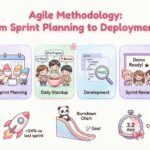
A semester is too long to manage in one go. Agile divides work into “Sprints,” which are fixed-length periods where a specific set of work is completed. For students, a two-week sprint is often ideal, aligning with weekly or bi-weekly assignment deadlines.
When planning, avoid overcommitting. Students often underestimate the time required for research, editing, and unexpected life events. It is better to complete fewer items than to miss deadlines.
Communication breakdowns are the most common failure point in group projects. Agile relies on scheduled, focused communication rather than sporadic messaging. Establishing these rituals reduces the cognitive load of coordinating and ensures everyone is aligned.
Not all students can meet at the same time. Establish a central place for updates. When a task is completed, update the task board immediately. If a blocker arises, tag the relevant members. Avoid long chains of text messages that bury important information.
Student life is filled with distractions: exams, part-time jobs, social commitments, and mental health needs. Agile provides mechanisms to handle scope creep and protect the team’s energy.
Disagreement over what constitutes “finished” work is a major source of conflict. The team must define “Done” for every task. Does “research done” mean a Google search, or a bibliography with five sources? Does “code done” mean it runs, or that it passes tests? Write these definitions down.
New ideas often arise mid-project. In agile, these are welcome but must be managed. Add new ideas to a “Backlog” list for the next sprint. Do not add them to the current sprint unless the team agrees to swap them with an existing task of equal effort.
The Retrospective is the heart of agile improvement. It is a dedicated time to reflect on the process, not the product. Without this, teams repeat the same mistakes every semester.
Example Action Items:
Conflict is natural in any group. In agile, conflict is viewed as an opportunity to improve the system. However, it must be managed constructively.
Not all student projects are the same. A software engineering capstone requires different practices than a history research paper. The core principles remain, but the application changes.
Agile works best when there is mutual trust. In student teams, trust is built through consistency. When a team member says they will do something, they do it. If they cannot, they communicate early.
The habits formed by applying agile in student groups extend far beyond the semester. Professional environments increasingly value these skills. Experience with iterative planning, transparent communication, and continuous improvement makes graduates more employable.
Students who learn to manage their own workflow, handle feedback without defensiveness, and collaborate effectively across time zones or schedules are better prepared for the modern workforce. The project grade is a short-term metric, but the process skills are long-term assets.
Implementing these practices requires discipline. It is easier to fall back into old habits of last-minute cramming and vague communication. However, the investment pays off in reduced stress, higher quality work, and a more enjoyable group experience. By treating the project like a living system rather than a static assignment, student teams can navigate complexity with confidence and deliver results that reflect their true potential.
Start small. Pick one practice, such as the daily check-in or the sprint goal, and implement it for the next project. Evaluate the results. If it reduces stress, keep it. If it adds friction, adjust it. The goal is not to follow a rigid rulebook, but to find the rhythm that allows the team to thrive.
Agile is not just a method for building software. It is a mindset for building teams. For students, it is a framework for navigating the chaos of academia with clarity and purpose.