 Visual Paradigm Desktop |
  Visual Paradigm Online


Entering the professional landscape as an Information Systems graduate marks a significant transition from academic theory to practical application. While university curricula provide a strong foundation in systems analysis, database design, and software engineering principles, the day-to-day reality of delivering value often demands a different approach. This is where Agile Project Management becomes indispensable. It is not merely a methodology but a mindset that prioritizes adaptability, customer collaboration, and continuous improvement.
For new graduates, understanding how to structure work, manage teams, and deliver iterative value is crucial. This guide provides a comprehensive Agile Project Management Checklist tailored for Information Systems professionals. It moves beyond generic advice to address the specific technical and organizational challenges you will face in your early career.
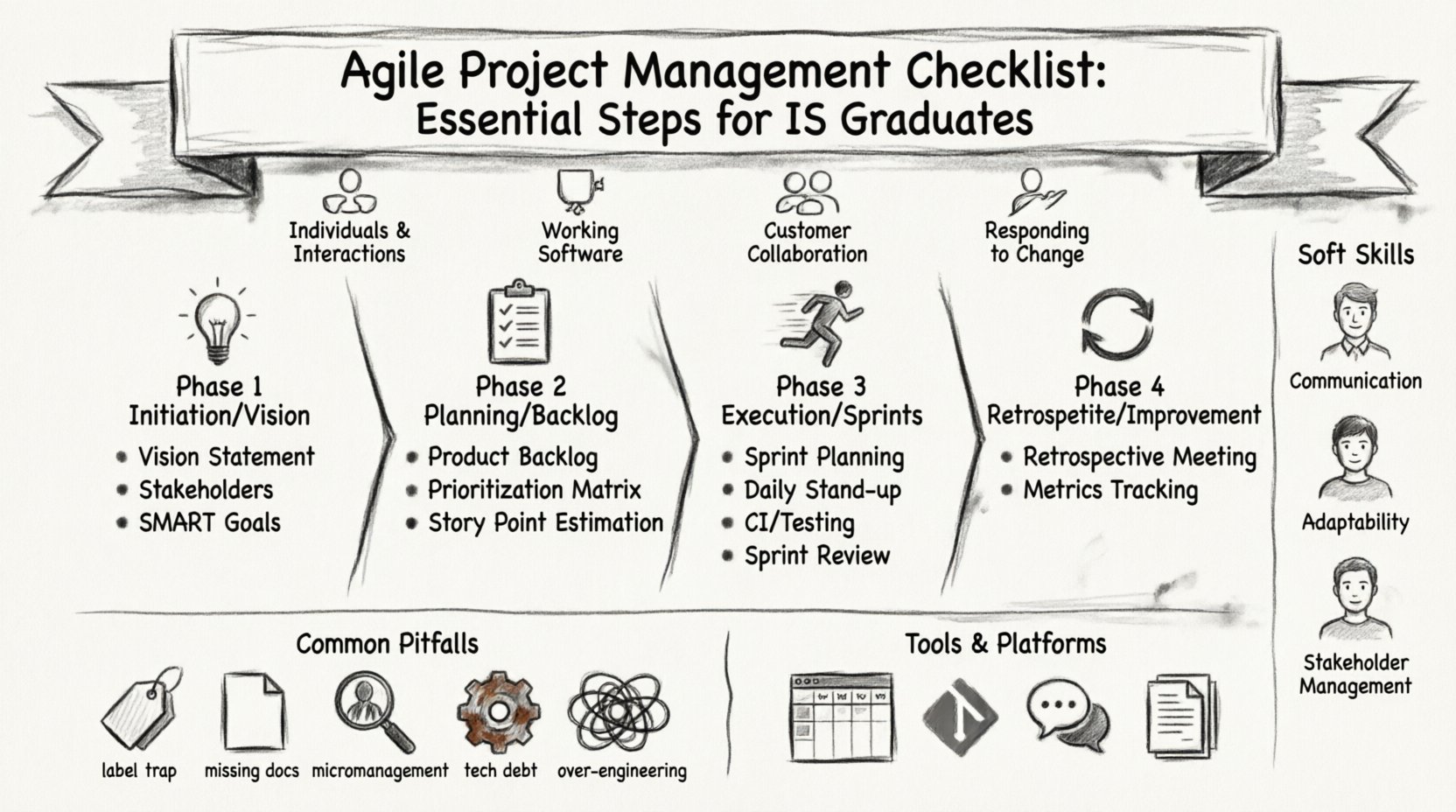
Before diving into the checklist, it is vital to grasp the core philosophy. Agile is not a rigid set of rules to be followed blindly. It is a collection of values and principles that encourage responsiveness to change over following a strict plan. For an IS graduate, this means shifting focus from simply writing code to solving business problems.
The first phase of any project sets the tone for its success. In an Agile environment, this phase is lighter than in traditional Waterfall models but requires clear direction to prevent scope creep.
Every project needs a north star. This is not a detailed specification but a high-level description of what the system aims to achieve.
Successful projects rely on understanding who holds influence and who holds interest. Create a stakeholder map to identify key players.
Set SMART goals (Specific, Measurable, Achievable, Relevant, Time-bound) for the initial phase. Avoid vague aspirations.
Agile planning is iterative. You do not plan the entire project in detail at the start. Instead, you plan enough to get the first cycle moving, then refine as you learn.
The Product Backlog is the single source of truth for all work items. It should be a dynamic list, not a static contract.
Not all items are created equal. Use a prioritization framework to decide what gets built first.
| Priority Level | Description | Example |
|---|---|---|
| High | Critical for MVP launch | User Authentication Module |
| Medium | Important but not blocking | Dark Mode Toggle |
| Low | Enhancements or nice-to-haves | Animated Welcome Screen |
Estimation helps in planning capacity. Avoid guessing in hours; use relative sizing instead.
Execution in Agile happens in iterations, commonly known as Sprints. These are time-boxed periods, usually two weeks long, where a specific set of work is completed.
This meeting kicks off the iteration. The goal is to select items from the backlog that the team can commit to finishing.
A short, 15-minute meeting for the team to synchronize. It is not a status report for management but a planning tool for the developers.
In Information Systems, code quality is paramount. Agile does not mean skipping tests.
At the end of the Sprint, demonstrate the work to stakeholders. This is a feedback opportunity, not just a demo.
This phase is often overlooked but is critical for long-term team health. The Retrospective is a meeting dedicated to improving the process itself.
Hold this meeting immediately after the Sprint Review. The focus is on people, processes, and tools.
Use data to inform improvements, not to punish individuals. Track metrics that reflect flow and quality.
| Metric | Purpose | Target |
|---|---|---|
| Sprint Velocity | Measure average work completed per Sprint | Stable over time |
| Lead Time | Time from request to delivery | Decreasing trend |
| Bug Rate | Number of defects found post-release | Low and stable |
Technical skills get you the job, but soft skills keep you in it. Agile relies heavily on collaboration and communication.
As an IS graduate, you may be used to communicating through code or documentation. Agile requires verbal and written clarity.
Requirements will change. Code will break. Systems will be down. Your ability to remain calm and problem-solve is vital.
You will often act as a bridge between technical teams and business users.
New teams often encounter specific traps when adopting Agile. Awareness helps you navigate around them.
While specific software brands are not the focus, the *functionality* of tools is essential for tracking work.
Becoming proficient in Agile project management is a journey, not a destination. As an Information Systems graduate, you have the technical background to understand the “how” of development. Now, you must master the “why” and “when” of management.
Start small. Implement one or two practices from this checklist in your current role or academic projects. Measure the impact. Adjust. Over time, these practices will become second nature. The goal is not to follow a checklist perfectly but to cultivate a mindset that delivers value continuously.
Remember, the best projects are those where the team learns together, adapts to feedback, and ships working software that solves real problems. Use this guide as a reference point, but let your experience shape your own workflow. Success in Agile comes from consistency, openness, and a relentless focus on the user.
By following these steps, you position yourself as a valuable asset in any technology-driven organization. You are ready to lead, collaborate, and deliver.
 Agile vs. Waterfall: A Side-by-Side Breakdown for CS Students
 Agile Methodology: A Complete Walkthrough from Sprint Planning to Deployment
 5 Common Agile Mistakes That Stall Software Development Teams (And How to Fix Them)
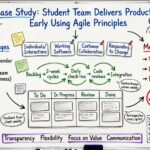 Case Study: How a Student Team Delivered a Product Early Using Agile Principles