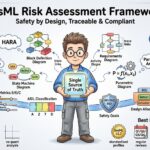
Enterprise systems are becoming increasingly complex, requiring precise documentation and clear architectural alignment. Systems Modeling Language (SysML) serves as a critical standard for visualizing, specifying, analyzing, and designing complex systems. However, without a structured governance framework, SysML models can drift from their intended purpose, leading to inconsistencies and misalignment with business goals. 🏗️
Leadership in Enterprise Architecture (EA) must prioritize the establishment of robust governance mechanisms. This ensures that every model created contributes value and adheres to organizational standards. This guide outlines a comprehensive framework for implementing governance within SysML environments, focusing on standardization, quality assurance, and strategic alignment. 📋
🏗️ The Necessity of Structured Oversight
In the absence of governance, modeling efforts often become fragmented. Different teams may adopt varying conventions, making integration difficult. A governance framework provides the rules and processes necessary to maintain integrity across the enterprise. 🛑
- Consistency: Ensures all diagrams and models follow the same syntax and semantics.
- Traceability: Maintains clear links between requirements, design, and verification.
- Scalability: Allows the model base to grow without becoming unmanageable.
- Compliance: Meets regulatory and internal audit requirements.
Without these pillars, the investment in SysML tools and training yields diminishing returns. Governance transforms modeling from a creative exercise into a disciplined engineering practice. ✅
🧱 Core Pillars of Governance
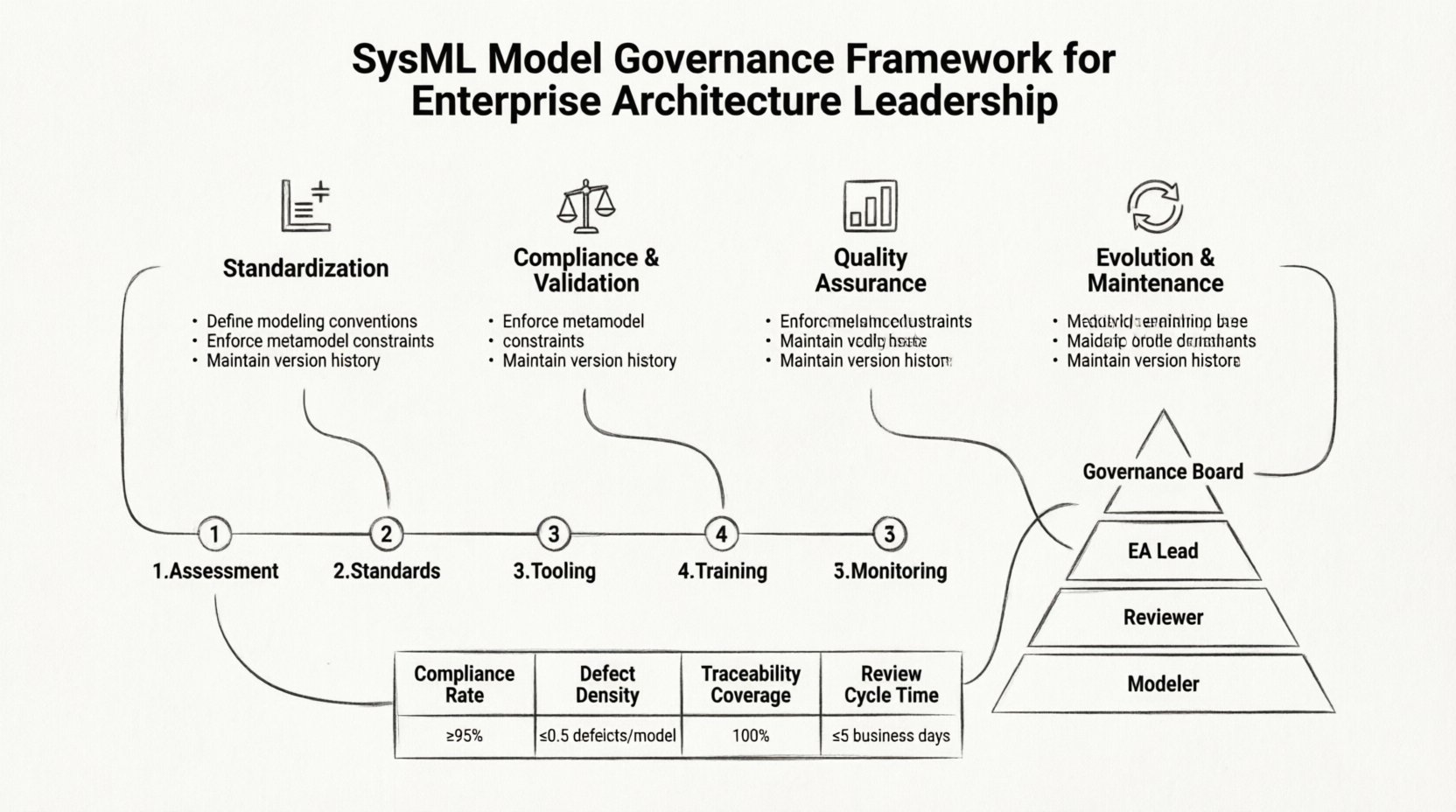
A successful framework rests on four foundational pillars. Each pillar addresses a specific aspect of model management and quality control.
1. Standardization 📏
Standardization defines the rules for how models are constructed. This includes naming conventions, diagram layouts, and profile definitions.
- Naming Conventions: Establish rules for packages, blocks, and relationships (e.g., prefixes, suffixes).
- Diagram Types: Specify which diagrams are required for specific phases of the lifecycle.
- Profiles: Define custom stereotypes and tagged values to extend the language for specific domains.
2. Compliance and Validation ⚖️
Compliance ensures that models adhere to the defined standards. Validation checks for semantic correctness and logical consistency.
- Automated Checks: Use scripts or built-in tools to verify constraint satisfaction.
- Manual Reviews: Schedule periodic reviews by senior architects for complex designs.
- Version Control: Ensure all changes are tracked and approved before merging.
3. Quality Assurance 📊
Quality assurance goes beyond syntax. It evaluates the usefulness and accuracy of the model for its intended audience.
- Completeness: Are all required elements present?
- Accuracy: Does the model reflect the current state of the system?
- Readability: Is the information clear to stakeholders?
4. Evolution and Maintenance 🔄
Models must evolve alongside the systems they represent. Governance must include processes for updating models as requirements change.
- Change Management: Formalize how model changes are requested and approved.
- Deprecation: Define how obsolete models or elements are archived.
- Training: Ensure modelers stay updated on best practices and standards.
🗺️ Implementation Roadmap
Implementing this framework requires a phased approach. Rushing the process often leads to resistance and incomplete adoption. The following steps outline a logical progression. 🚀
Phase 1: Assessment and Planning
Before defining rules, understand the current state. Identify existing models, tools, and pain points.
- Conduct a gap analysis of current modeling practices.
- Identify key stakeholders who will be affected by the changes.
- Define the scope of the initial governance rollout.
- Secure leadership support for the initiative.
Phase 2: Definition of Standards
Develop the documentation that will guide future modeling efforts.
- Create a Style Guide for SysML diagrams.
- Define the core package structure for the enterprise.
- Establish naming conventions for all model elements.
- Document the required profiles and extensions.
Phase 3: Tooling and Automation
Reduce manual effort by leveraging automation wherever possible.
- Configure model validation scripts within the modeling environment.
- Set up repositories for centralized storage and versioning.
- Implement access controls to protect sensitive architecture data.
- Create templates for common diagram types.
Phase 4: Training and Rollout
People are the most critical component of the framework. Ensure they are equipped to succeed.
- Conduct workshops on the new standards and tools.
- Provide certification or competency assessments for modelers.
- Establish a help desk or support channel for governance questions.
- Launch a pilot project to test the framework in a real scenario.
Phase 5: Monitoring and Improvement
Governance is not a one-time project. It requires ongoing attention.
- Collect metrics on model quality and compliance rates.
- Review the standards annually to ensure relevance.
- Gather feedback from the modeling community.
- Adjust the framework based on lessons learned.
👥 Roles and Stakeholders
Clear roles are essential for accountability. The following table outlines key responsibilities within the governance structure.
| Role |
Responsibility |
Authority Level |
| Modeler |
Create and maintain models according to standards. |
Operational |
| Model Reviewer |
Check models for compliance and quality before release. |
Tactical |
| EA Lead |
Define standards and resolve architectural conflicts. |
Strategic |
| Governance Board |
Approve major changes to the framework and standards. |
Executive |
| Tool Administrator |
Manage access, backups, and validation configurations. |
Technical |
📊 Quality Assurance and Metrics
Quantifiable metrics provide evidence of the framework’s effectiveness. Relying on subjective assessments can lead to ambiguity.
Key Performance Indicators (KPIs)
- Compliance Rate: Percentage of models that pass automated validation checks.
- Defect Density: Number of errors found per 1,000 lines of model code.
- Traceability Coverage: Percentage of requirements linked to design elements.
- Review Cycle Time: Average time taken to approve a model submission.
- Update Latency: Time between requirement change and model update.
Audit Process
Regular audits ensure that the framework is being followed. These audits should be scheduled periodically.
- Quarterly Spot Checks: Randomly select a subset of models for detailed review.
- Annual Comprehensive Audit: Evaluate the entire model base against standards.
- Project-Based Audits: Review models at key milestones of a project lifecycle.
- Post-Implementation Review: Assess the model after the system is deployed to verify accuracy.
🌐 Integrating with Broader EA Strategies
SysML does not exist in a vacuum. It must integrate with the broader Enterprise Architecture framework. This ensures alignment between technical details and business strategy. 🤝
- Alignment with TOGAF: Map SysML diagrams to Architecture Development Method (ADM) phases.
- Integration with Business Process Models: Link SysML requirements to BPMN diagrams where applicable.
- Software Architecture Correlation: Ensure SysML system models align with software architecture diagrams.
- Data Governance: Maintain consistency between data models and system interfaces.
Leadership must ensure that the SysML governance framework supports the organization’s broader goals. If the framework creates bottlenecks without adding value, it should be adjusted. The goal is enablement, not restriction.
⚠️ Common Pitfalls and Solutions
Even with a solid plan, challenges arise. Understanding common pitfalls helps in mitigating risks early.
Pitfall 1: Over-Standardization
Creating too many rules stifles creativity and slows down development.
- Solution: Focus on critical standards only. Allow flexibility in low-risk areas.
- Solution: Review standards regularly to remove unnecessary constraints.
Pitfall 2: Lack of Tooling Support
Manual enforcement of rules is unsustainable at scale.
- Solution: Invest in tooling that supports automated validation.
- Solution: Use scripting to generate reports on compliance.
Pitfall 3: Resistance to Change
Modelers may prefer their own methods over enforced standards.
- Solution: Involve modelers in the design of the standards.
- Solution: Highlight the benefits of governance, such as easier integration and reuse.
Pitfall 4: Outdated Models
Models become inaccurate as the system evolves.
- Solution: Link model updates to requirement change requests.
- Solution: Implement a “model health check” before major project gates.
📈 Metrics Dashboard Example
Visualizing data helps leadership understand the state of the architecture. A dashboard should provide a high-level view of model health.
| Category |
Metric |
Target |
Frequency |
| Quality |
Validation Pass Rate |
> 95% |
Weekly |
| Completeness |
Requirement Link Coverage |
100% |
Per Milestone |
| Efficiency |
Avg Review Time |
< 5 Days |
Monthly |
| Adoption |
Models per Team |
Varies |
Quarterly |
🔒 Security and Access Control
Architecture models often contain sensitive information regarding system capabilities and vulnerabilities. Governance must address security alongside quality.
- Role-Based Access Control (RBAC): Restrict access based on user roles.
- Data Classification: Label models as public, internal, or confidential.
- Audit Logs: Track who accessed or modified models.
- Backup and Recovery: Ensure models are backed up and can be restored.
Security governance is as important as quality governance. A breach in architectural integrity can lead to systemic failures. 🛡️
🔄 Continuous Improvement Cycle
The framework is not static. It must adapt to new technologies, methodologies, and organizational changes.
- Feedback Loops: Create channels for users to report issues with standards.
- Industry Benchmarks: Compare practices with industry standards and peers.
- Technology Updates: Adopt new features in modeling tools that improve governance.
- Lessons Learned: Document failures and successes to refine the process.
By treating the governance framework as a living system, leadership ensures its long-term viability. This approach fosters a culture of continuous improvement and accountability. 🌱
 Visual Paradigm Desktop |
  Visual Paradigm Online