Visual Paradigm Desktop |
  Visual Paradigm Online


In an era defined by volatility and rapid change, the stability of a business is no longer guaranteed by past performance alone. Organizations must look outward to understand the forces that shape their operating environment. This guide explores how to construct resilient business models using the PEST analysis framework. By systematically evaluating external factors, leaders can anticipate disruptions and design strategies that withstand uncertainty.
The modern marketplace is dynamic. Shifts in regulation, economic cycles, societal values, and technological capabilities occur simultaneously. Ignoring these macroeconomic trends leaves a company vulnerable. A resilient model does not just survive shocks; it adapts and evolves. This document provides a detailed look at applying PEST analysis to strengthen organizational robustness.
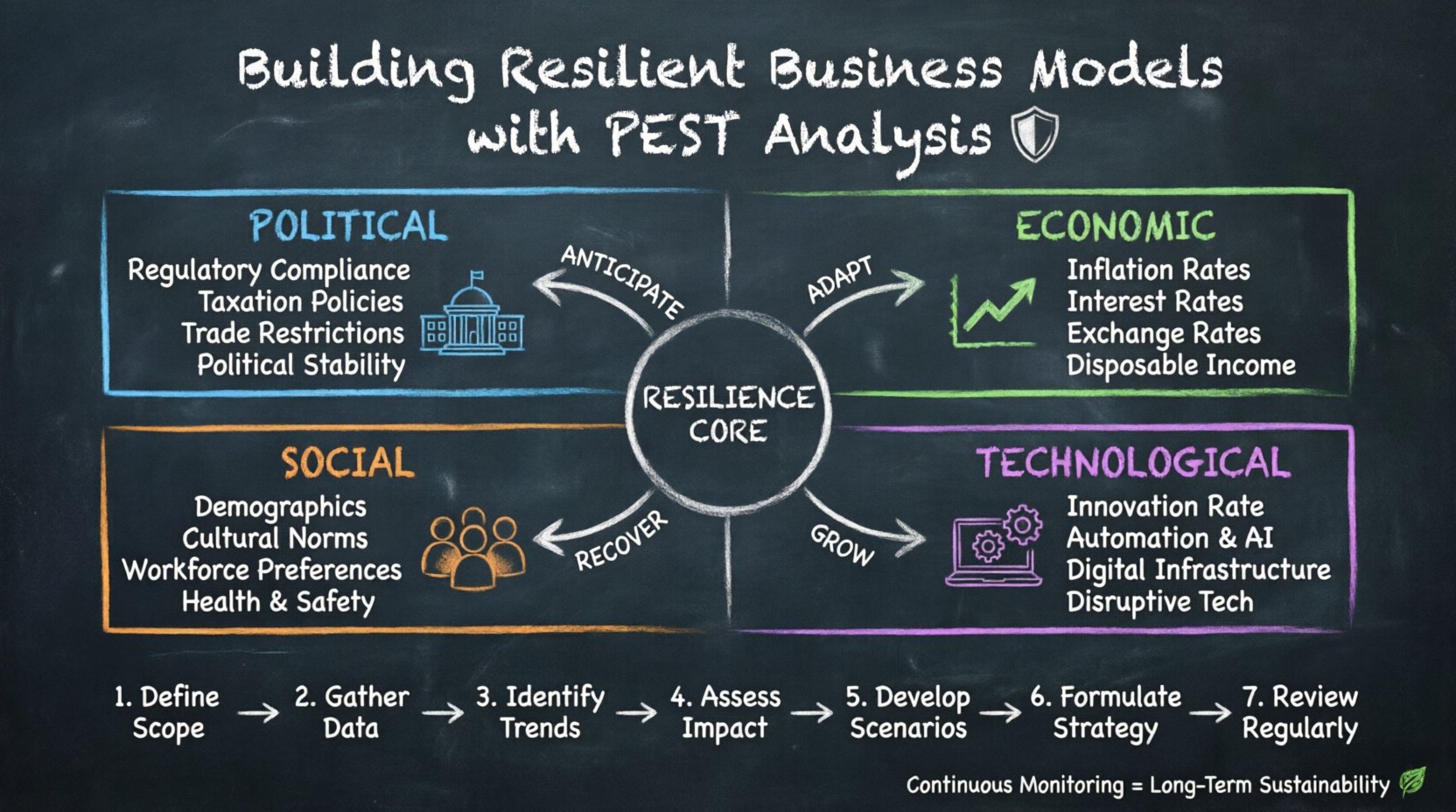
Resilience extends beyond simple survival. It involves the capacity to recover quickly from difficulties and maintain core functions during disruption. In a business context, this means the ability to continue delivering value to customers even when external conditions deteriorate.
Resilience requires a proactive stance. Relying on reactive measures often leads to higher costs and lost market share. Strategic planning must integrate external analysis to create buffers against unforeseen events.
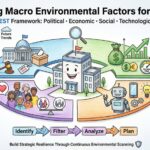
PEST analysis is a strategic tool used to scan the macro-environment. It categorizes external factors into four distinct areas: Political, Economic, Social, and Technological. Each category influences business viability in unique ways. Understanding the interplay between these factors is crucial for building a model that can endure.
Government actions and policies significantly impact business operations. Stability in the political environment fosters growth, while instability creates risk. Leaders must monitor legislative changes that affect compliance, taxation, and trade.
For a resilient model, political risk is not just about following rules. It is about understanding how policy shifts might alter the competitive landscape. Diversifying operations across different jurisdictions can mitigate the impact of adverse political decisions in a single region.
Economic conditions dictate purchasing power and cost structures. Even healthy businesses can fail if they misjudge the economic cycle. Fluctuations in inflation, interest rates, and exchange rates directly impact profitability.
Economic resilience involves maintaining liquidity and managing debt levels carefully. It also means building a customer base that remains stable across different economic cycles. If a business relies heavily on discretionary spending, it must be prepared for downturns.
Societal trends shape consumer behavior and workforce dynamics. Demographic shifts, cultural values, and lifestyle changes influence what products are desirable and how employees operate.
Social resilience requires alignment with community values. Brands that ignore social shifts risk reputational damage and loss of talent. Adapting to new social contracts ensures continued relevance and trust.
Technology drives efficiency and innovation. However, rapid advancement can render existing business models obsolete. Continuous monitoring of technological trends is essential for maintaining a competitive edge.
Technological resilience involves investing in scalable infrastructure and maintaining the skills to adapt. It also means being willing to pivot away from legacy systems that hinder growth.
Collecting data is only the first step. The value lies in translating insights into actionable strategies. The table below outlines how specific external factors translate into resilience actions.
| Factor Category | Potential Disruption | Resilience Action |
|---|---|---|
| Political | New Trade Tariffs | Diversify supply chain partners across borders |
| Economic | High Inflation | Implement dynamic pricing and cost-optimization protocols |
| Social | Shift to Remote Work | Invest in digital collaboration tools and asynchronous workflows |
| Technological | Cybersecurity Threats | Enhance data protection and backup redundancy systems |
| Political | Regulatory Changes | Establish a dedicated compliance monitoring function |
| Economic | Currency Fluctuation | Use hedging strategies and multi-currency accounts |
| Social | Consumer Ethics | Adopt transparent sourcing and sustainability reporting |
| Technological | Platform Obsolescence | Build modular architectures that allow for component replacement |
This matrix demonstrates that resilience is not a single action but a collection of prepared responses. Each factor requires a tailored approach to mitigate risk and capitalize on opportunities.
Conducting a PEST analysis requires a structured approach. It is not a one-time event but a recurring process that informs strategic decisions. Follow these steps to integrate the analysis into your planning cycle.
Collaboration is key during this process. Input from finance, operations, marketing, and legal teams ensures a comprehensive view. Siloed information leads to blind spots.
Static plans fail in dynamic environments. A resilient business model includes feedback loops that trigger adjustments when specific thresholds are met. This concept is often referred to as a rolling forecast or adaptive strategy.
Adaptation is not about constant change. It is about making the right changes at the right time. Over-reacting to every minor fluctuation can destabilize the organization. Focus on significant shifts that alter the fundamental assumptions of the business model.
Even with a solid framework, organizations face hurdles when applying PEST analysis to resilience planning. Recognizing these challenges helps avoid common pitfalls.
To overcome these challenges, leadership must foster a culture of inquiry. Encourage debate and challenge assumptions. Ensure that the analysis is accessible and understood by the teams responsible for execution.
Resilience is not the end goal; it is the foundation for sustainable growth. A company that can withstand shocks is better positioned to capture opportunities when others falter. By understanding the macro-environment, businesses can align their mission with societal needs.
Consider the intersection of technology and social factors. As digital adoption increases, customer expectations rise. Businesses that fail to modernize their service delivery will lose relevance. Similarly, economic resilience allows for investment in research and development during downturns, positioning the firm for a stronger recovery.
Building a resilient model requires discipline. It demands that leaders look beyond the immediate horizon and consider the forces shaping the future. The PEST framework provides the structure needed to navigate this complexity. By integrating these insights, organizations can build a business that is not only strong but enduring.
The path forward involves continuous learning and adjustment. Markets evolve, and so must the strategies used to compete within them. A commitment to rigorous external analysis ensures that the business remains aligned with reality, rather than wishful thinking.