 Visual Paradigm Desktop |
  Visual Paradigm Online


Legal frameworks do not exist in a vacuum. They are deeply intertwined with the broader environment in which organizations operate. To navigate this complex terrain, stakeholders require a structured approach to analysis. The PEST analysis model offers a robust method for examining external macro-environmental factors. While often applied to market strategy, its application to legal compliance is equally critical. This guide explores how political factors shape the legal landscape and influence organizational risk.
Political stability, regulatory shifts, and government policy form the backbone of legal obligations. Ignoring these elements can lead to significant compliance failures. By integrating political analysis into legal planning, entities can anticipate changes rather than reacting to them. This proactive stance reduces liability and strengthens operational continuity.
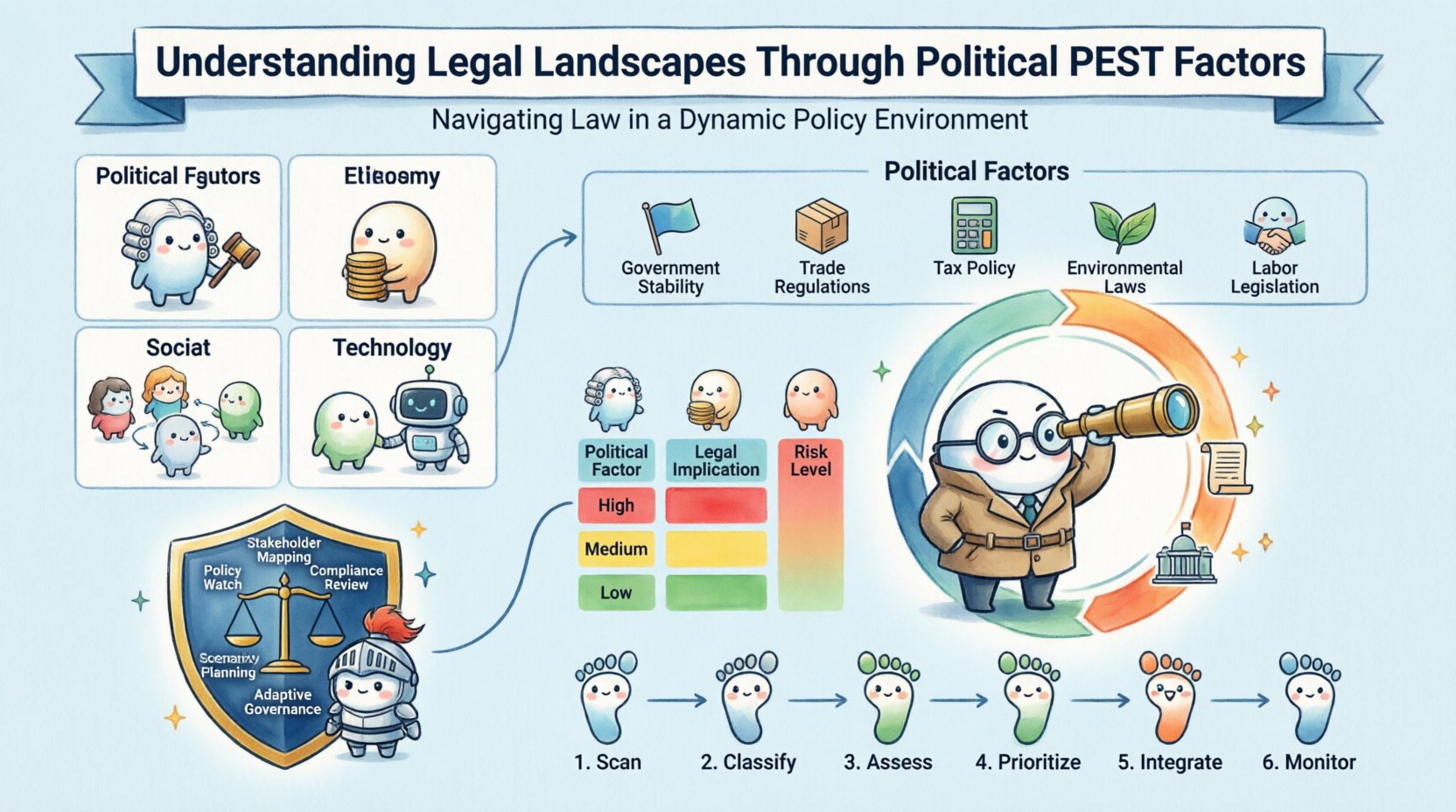
PEST stands for Political, Economic, Social, and Technological. Originally designed for strategic market planning, it has evolved into a versatile tool for risk assessment. Each letter represents a category of external factors that impact an organization. In the context of legal landscapes, these factors dictate the rules of engagement.
When applied to legal matters, the Political component becomes the primary driver. Economic factors influence contract enforcement and bankruptcy proceedings. Social trends shape consumer protection laws. Technological shifts create new data privacy regulations. Understanding the interplay between these categories provides a holistic view of legal risk.
Political factors refer to the extent to which a government intervenes in the economy or society. In legal terms, this translates to the creation, modification, and enforcement of statutes. These factors are often the most volatile aspect of the macro-environment. A change in administration can result in a complete overhaul of regulatory requirements.
Key areas of political influence include:
These elements are not static. They evolve based on public sentiment, economic pressure, and geopolitical events. Legal teams must monitor these signals continuously. Failure to do so results in outdated compliance strategies.
To visualize the connection between political actions and legal outcomes, consider the following breakdown. This table illustrates how specific political inputs translate into legal requirements.
| Political Factor | Legal Implication | Risk Level |
|---|---|---|
| Change in Administration | Shift in regulatory priorities | High |
| New Tax Legislation | Revised financial reporting standards | Medium |
| Trade Sanctions | Restriction on international partnerships | High |
| Environmental Standards | Stricter waste disposal protocols | Medium |
| Labor Union Support | Enhanced collective bargaining rights | Medium |
| Data Privacy Bills | Mandatory cybersecurity measures | High |
As shown, the impact varies by sector. Industries reliant on government contracts face higher risks during political transitions. Multinational corporations must navigate conflicting laws across different jurisdictions. This complexity requires a nuanced approach to legal management.
Regulatory shifts often occur following political events. Elections, referendums, and policy announcements trigger waves of legal change. Organizations must establish mechanisms to detect these shifts early. Passive monitoring is insufficient in a dynamic environment.
Effective monitoring involves several layers of intelligence gathering:
These mechanisms provide the data needed to adjust legal strategies. They allow organizations to prepare for implementation phases before laws become active. Preparation reduces the cost of compliance and minimizes disruption.
Once a shift is identified, compliance protocols must be updated. This involves reviewing internal policies and procedures. Contracts may need renegotiation to align with new terms. Training programs should be updated to reflect new obligations.
Key steps in adaptation include:
While political factors are dominant, they do not operate in isolation. Economic conditions influence the enforcement of laws. For example, during a recession, regulatory agencies may relax certain compliance requirements to stimulate business. Conversely, in times of growth, enforcement may tighten to prevent abuse.
Social factors also play a crucial role. Public opinion can drive legislative change. Movements regarding diversity, equity, and inclusion have led to new employment laws. Environmental activism has accelerated climate-related regulations. Legal teams must stay attuned to societal values.
Integrating these factors into the analysis creates a more accurate risk profile. It moves the focus from static rules to dynamic conditions. This perspective is essential for long-term planning.
Understanding the legal landscape is only the first step. The next phase involves assessing risk and implementing mitigation strategies. Risk assessment quantifies the potential impact of political and legal changes. It helps prioritize resources and allocate budgets effectively.
Risks can stem from various sources within the political environment:
Each category requires a different mitigation approach. Legislative risk often requires advocacy or lobbying. Regulatory risk is managed through strict adherence to guidelines. Reputational risk is addressed through transparency and ethical conduct. Operational risk is reduced via contingency planning.
Tactics should be tailored to the specific risk profile. Some organizations prefer to avoid risk entirely. Others choose to accept it if the potential reward is high. The goal is to make informed decisions based on data.
Effective tactics include:
These strategies build resilience. They ensure that the organization can withstand shocks to the legal environment without collapsing.
Putting this analysis into practice requires a structured process. Random actions lead to confusion. A clear roadmap ensures consistency. The following steps outline a logical approach to integrating PEST analysis into legal strategy.
Each step builds on the previous one. Skipping a step can compromise the entire effort. Regular review cycles ensure the strategy remains relevant. The legal landscape changes rapidly; static plans become obsolete quickly.
Consider a hypothetical scenario involving a multinational technology firm. The company operates in several countries with varying political climates. In one region, a new administration introduces strict data localization laws. In another, trade tariffs increase the cost of hardware components.
The political PEST analysis reveals the following:
Based on this analysis, the legal team advises restructuring data centers. The finance team adjusts budget forecasts for tariffs. The marketing team emphasizes privacy features to address social concerns. The technology team evaluates cloud providers. This coordinated response minimizes disruption and aligns with the new environment.
Looking ahead, the intersection of politics and law will become even more complex. Geopolitical tensions are rising. Digital currencies challenge traditional financial regulations. Artificial intelligence introduces new ethical and legal questions. These trends will require continuous adaptation.
Organizations must remain agile. Rigid adherence to past practices is no longer viable. Flexibility allows for quick pivots when the political wind changes. Investing in legal intelligence capabilities is a strategic necessity.
Key areas to watch include:
Staying informed on these topics ensures readiness. It positions the organization as a leader rather than a follower.
Legal strategy is not just about following rules. It is about understanding the forces that create those rules. Political factors are the primary architects of the legal environment. By applying PEST analysis, organizations gain clarity on these forces.
This approach transforms legal risk from a threat into a manageable variable. It enables better decision-making and resource allocation. The result is a more resilient and compliant organization. Success in this area requires patience, diligence, and a commitment to continuous learning.
Adopting this framework today prepares you for the challenges of tomorrow. The legal landscape will continue to evolve. Those who understand the political drivers will navigate it successfully.