 Visual Paradigm Desktop |
  Visual Paradigm Online


The landscape of software engineering education is shifting. Traditional, linear models of instruction no longer align with the dynamic realities of modern industry. Students entering the workforce today need more than just syntax knowledge; they require a deep understanding of workflow, collaboration, and continuous improvement. This is where frameworks like Agile and Lean become critical components of a curriculum. But which one should you prioritize? 🤔
This guide provides a comprehensive analysis of Agile and Lean methodologies within the context of academic software engineering programs. We will explore their origins, core principles, implementation strategies, and the specific skills they cultivate in students. By the end, you will have the clarity needed to select the framework that aligns with your educational goals.
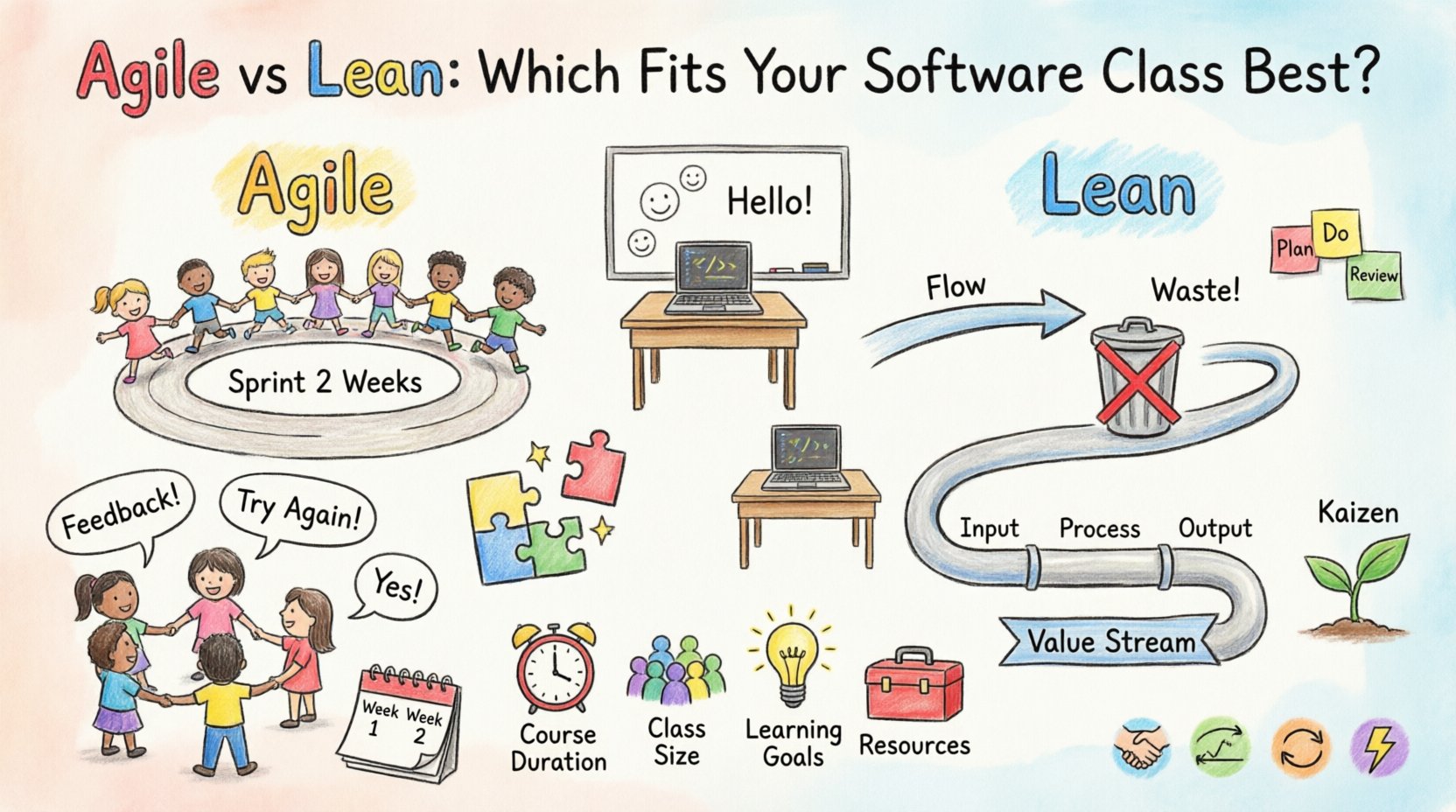
To make an informed decision, we must first define the core philosophies. Both frameworks emerged from a desire to improve efficiency and quality, but they approach the problem from different angles.
Agile is a mindset that prioritizes individuals and interactions over processes and tools. It focuses on iterative development, where requirements and solutions evolve through collaboration between self-organizing cross-functional teams. In an educational setting, this translates to project-based learning where students work in sprints or cycles.
Lean originates from manufacturing principles, specifically the Toyota Production System. It centers on maximizing value for the customer while minimizing waste. In software engineering education, Lean emphasizes the flow of work and the elimination of activities that do not add value.
Understanding where these frameworks come from helps explain their application in a classroom.
While Agile focuses on the process of development teams, Lean focuses on the flow of value. In a curriculum, this distinction matters for how you structure assignments.
Visualizing the differences helps clarify where each fits best in a learning environment. The following table outlines the primary distinctions.
| Aspect | Agile | Lean |
|---|---|---|
| Primary Goal | Adaptability to change | Elimination of waste |
| Workflow | Iterative cycles (Sprints) | Continuous flow (Kanban) |
| Team Structure | Self-organizing teams | Value Stream Teams |
| Measurement | Velocity, Sprint Burndown | Lead Time, Cycle Time |
| Improvement | Retrospectives | Kaizen (Continuous Improvement) |
Notice that both rely on feedback loops. However, Agile uses discrete timeboxes, while Lean uses a continuous flow model.
Integrating Agile into a software engineering curriculum requires a shift in how students perceive their role. They are no longer passive recipients of knowledge but active creators.
Instead of one large project at the end of the semester, break work into two-week cycles. Each cycle should have a clear goal, such as completing a specific feature or fixing a set of bugs. This mimics industry velocity.
Agile often uses roles like Scrum Master or Product Owner. In a curriculum, rotate these roles among students. This ensures everyone understands the responsibilities of leadership and facilitation, not just coding.
Pair programming and code reviews become mandatory. The goal is to share knowledge and catch errors early. This builds the soft skills required for modern engineering teams.
Lean requires a different approach, focusing heavily on process optimization and flow.
Use physical or digital boards to track work items. Columns might include To Do, In Progress, and Done. The constraint is the number of items in the “In Progress” column.
Have students map out the journey of a feature from idea to deployment. Identify steps that do not add value, such as excessive waiting or rework. This analytical skill is crucial for system design.
Encourage small, incremental changes to the process. Ask students to identify one thing they can improve in their workflow every week. This builds a habit of optimization.
Both frameworks produce different but complementary skill sets. Understanding these helps in curriculum design.
Grading under these frameworks requires moving beyond binary correctness. You must assess the process as well as the product.
Adopting these frameworks is not without difficulty. Faculty and administrators must navigate several hurdles.
Employers increasingly expect graduates to be familiar with these methodologies. However, the specific demand varies by organization.
A curriculum that balances both prepares students for a wider range of job markets. It signals that they can adapt to the culture of their future employer.
Many organizations do not stick strictly to one framework. They combine elements of both. This is often called Agile-Lean or Lean-Agile.
In a curriculum, this hybrid approach can be introduced in advanced courses. It allows students to see that frameworks are tools, not rigid rules.
When choosing a framework, consider the following factors.
The field is evolving. New trends are influencing how these frameworks are taught.
Curricula must remain flexible to incorporate these changes. The principles of Agile and Lean provide the stability needed to adapt to new technologies.
Selecting between Agile and Lean is not a binary choice. It depends on the specific needs of your program and the career paths of your students. Both frameworks offer valuable lessons in efficiency, collaboration, and continuous improvement.
Agile excels at fostering adaptability and team dynamics. It is ideal for courses focused on product development and user experience. Lean excels at teaching process optimization and flow. It is ideal for courses focused on system architecture and engineering operations.
Many successful programs integrate elements of both. They start with Agile to build team cohesion and introduce Lean principles to refine the workflow. This combination provides a robust foundation for a career in software engineering.
Ultimately, the goal is to prepare students for the reality of the workplace. Whether they use Agile, Lean, or a hybrid, the core skills of communication, critical thinking, and adaptability remain paramount. Focus on these outcomes, and the framework becomes a vehicle for learning rather than the destination itself.