 Visual Paradigm Desktop |
  Visual Paradigm Online


In the modern landscape of software development and project management, flexibility and speed are paramount. Traditional linear approaches often struggle to adapt to changing market demands or shifting user needs. This is where the Agile methodology shines. It is not merely a set of rules but a mindset focused on iterative progress, collaboration, and delivering value continuously. This guide provides a comprehensive walkthrough of the Agile lifecycle, covering everything from initial sprint planning to the final deployment of a product increment.
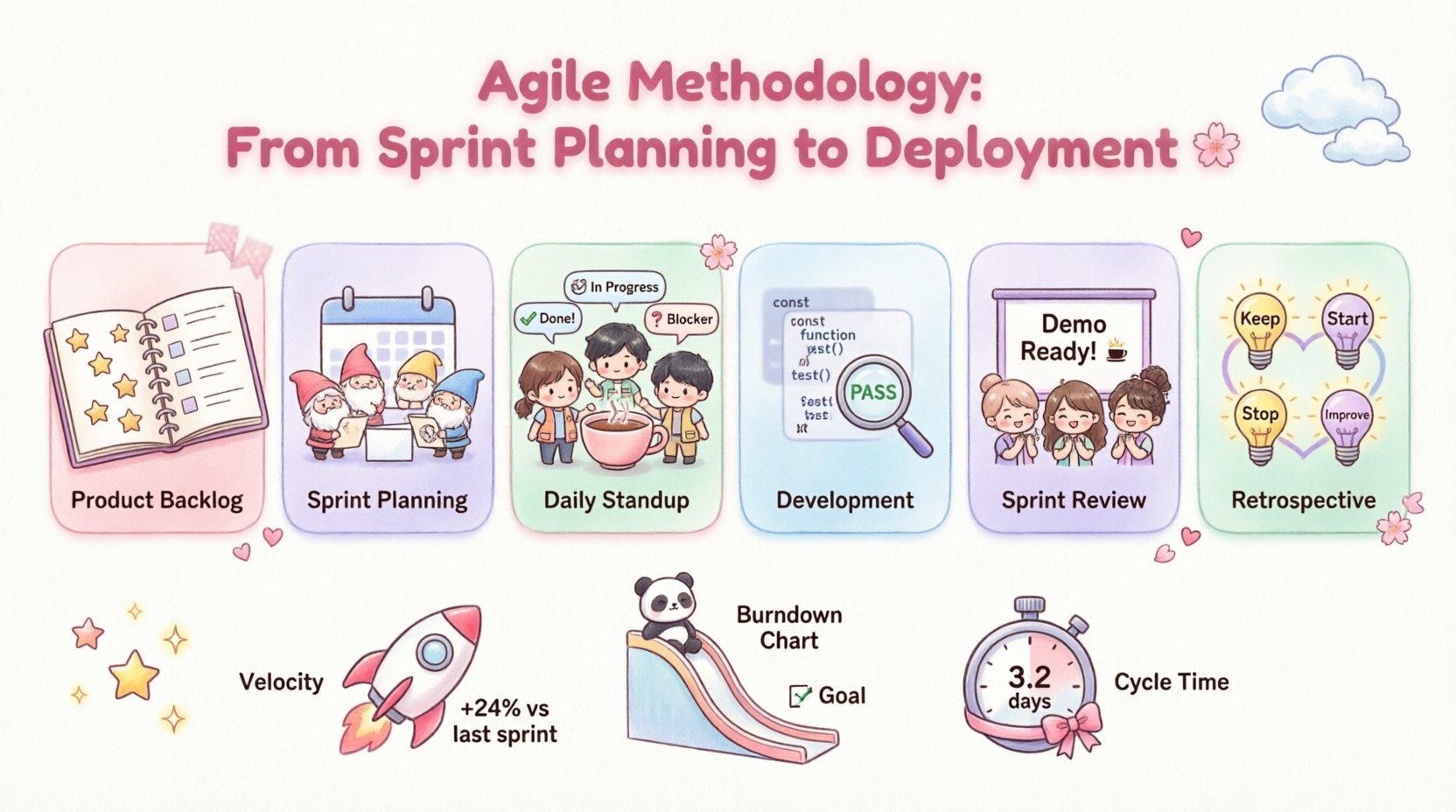
Before diving into the mechanics of sprints and ceremonies, it is essential to understand the foundation. Agile is built upon the Agile Manifesto, which values individuals and interactions over processes and tools, working software over comprehensive documentation, customer collaboration over contract negotiation, and responding to change over following a plan.
Unlike Waterfall models, where requirements are fixed at the start and changes are costly, Agile embraces change. The process is divided into short cycles, typically called sprints, lasting between one to four weeks. Each cycle produces a potentially shippable product increment.
Agile teams operate differently than traditional hierarchies. There is no single “boss” dictating tasks. Instead, specific roles ensure accountability and flow.
| Role | Primary Responsibility | Key Focus |
|---|---|---|
| Product Owner | Defines the vision and manages the backlog | Value and ROI |
| Scrum Master | Removes impediments and facilitates meetings | Process and Team Health |
| Development Team | Builds the product increment | Execution and Quality |
Effective tracking is crucial. Agile relies on specific artifacts to maintain transparency and focus.
This is a dynamic list of everything that might be needed in the product. It is ordered by priority. The Product Owner ensures this list is visible, transparent, and clear to the entire team. Items here are typically written as user stories.
Once a sprint begins, the team selects items from the Product Backlog to work on. These items form the Sprint Backlog. It represents the team’s plan for the current cycle.
The sum of all Product Backlog items completed during a sprint and the value of the increments of all previous sprints. Every increment must be in a usable condition, regardless of whether the Product Owner decides to release it immediately.
Regular meetings keep the team aligned. These are not just status updates; they are collaborative events designed to inspect and adapt.
This meeting kicks off the sprint. The entire team gathers to discuss what can be achieved. The Product Owner presents the top priority items, and the Development Team decides how much they can commit to based on their velocity and capacity.
A short, 15-minute meeting held every day. The focus is on synchronization, not reporting to a manager. Each team member answers three questions:
Held at the end of the sprint. The team demonstrates the work completed to stakeholders. This is a feedback session. The Product Owner may accept work, reject it, or ask for changes. It is a chance to inspect the Increment and adapt the Product Backlog if necessary.
This meeting is for the team only. No stakeholders are invited. The focus is on the process. The team discusses what went well, what went wrong, and how to improve for the next sprint. This is the engine of continuous improvement.
Understanding the theoretical roles is one thing; executing the flow is another. Here is a step-by-step breakdown of how a feature moves through the system.
Stakeholders or users identify needs. The Product Owner writes these as high-level epics or stories. These are added to the Product Backlog. Prioritization happens here based on business value and effort.
The team reviews the top items. They estimate effort using story points or hours. They pull items into the Sprint Backlog. Dependencies are identified. Risks are noted.
Developers write code. Designers create interfaces. Testers prepare test cases. Communication is constant. Pair programming or peer reviews ensure quality. If a blocker arises, the Scrum Master helps remove it immediately.
Testing is not a phase at the end; it happens throughout. Automated tests run against new code. Manual testing verifies user experience. Bugs are logged and fixed in the same sprint if possible.
Before merging code into the main branch, it undergoes peer review. This ensures adherence to standards and reduces technical debt. Integration testing checks how different modules work together.
The release candidate is created. Documentation is updated. Deployment scripts are verified. This stage ensures that the product can be moved to the production environment safely.
The code is released to users. This can be done via a full release or a feature flag rollout. Post-deployment, the team monitors logs and user feedback for any immediate issues.
To ensure the methodology is working, teams must track metrics. These numbers help identify bottlenecks and celebrate wins.
| Metric | What it Measures | Why it Matters |
|---|---|---|
| Velocity | Amount of work completed per sprint | Helps predict future capacity |
| Burndown Chart | Remaining work vs. time | Shows if the team is on track to finish |
| Cycle Time | Time from start to finish of a task | Indicates efficiency of the workflow |
| Defect Rate | Number of bugs found | Reflects code quality |
Even with a solid framework, teams face hurdles. Recognizing these early allows for better adaptation.
Stakeholders may want to add features mid-sprint. This disrupts focus.
Team members may not understand what needs to be built.
Communication gaps occur when teams are distributed.
Agile is not a destination; it is a journey. The Retrospective is the most critical tool for long-term success. It forces the team to look inward. Did we meet our goals? Was the process efficient? What was frustrating?
Improvement actions should be small and actionable. Trying to change everything at once often leads to failure. Focus on one process improvement per sprint. Over time, these small changes compound into significant efficiency gains.
Quality cannot be inspected in after the fact. It must be built in. This concept, often called “Shift Left,” means testing happens as early as possible.
As organizations grow, a single team is not enough. Multiple teams may work on the same product. Coordination becomes vital.
Adopting Agile requires a shift in culture. It demands trust, transparency, and a willingness to fail fast and learn. It is not about working faster; it is about working smarter. By focusing on delivering value in small increments, teams can respond to change effectively and build products that truly meet user needs.
Remember, the goal is not to follow a rigid set of rules but to embody the principles of collaboration and adaptability. Whether you are planning a sprint or deploying to production, keep the focus on the value delivered to the customer. With consistent practice and reflection, the workflow becomes second nature, and the team achieves a sustainable pace of delivery.